There has been a lot of talk about trash within the McKelvey Creek Wasteshed as the Regional District of Kootenay Boundary ushers in change with a new waste reduction program, to secure a greener tomorrow.
The RDKB has posted its weekly green bin and garbage curbside collection schedule on its website in anticipation of the program’s launch on Monday, October 2, 2023. These calendars will also be delivered to residents within the first two weeks of September by the collection contractor GFL.
“Pickup days will mostly remain unchanged, though residents should verify any schedule alterations online,” says Janine Dougall, RDKB’s General Manager of Environmental Services.
Transition specifics vary by municipality: Dual garbage and green bin collections will be weekly, even in areas previously bi-weekly. The Green bin service requires no tag, while garbage bags need prepaid tags. A list of garbage tag retailers can be found online here.
Green bins have been delivered to Rossland, Warfield, Trail, Montrose, Fruitvale, Area A, and Area B. GFL's split packer trucks, with separate compartments for waste types, will divert food waste from green bins and cut landfill by up to 38%. Surpassing backyard composting, catering to items like meat, bones and grease, Class A soil will be created from the food waste at RDCK's composting facility near Salmo.
"Keep yard waste, diapers, pet waste, metal, and all plastics out of green bins. Even 'compostable' or 'biodegradable' bags harm compost quality. Only kraft paper bags or 'Bag to Earth' liners are allowed. Alternatively, soiled newspaper or cardboard can be used,” adds Dougall.
"We know change is difficult and we extend our gratitude to those embracing these changes. Our staff will continue to assist in educating residents in the proper processes and benefits of the new program. With support from our municipal partners, the transition of garbage collection to the regional district is well underway,” says RDKB’s Board Chair Linda Worley. “Our approach to sorting transforms waste into beneficial products and our goal is to notably reduce recyclable waste in landfills. Let's unite to bid farewell to landfill waste, uphold our Zero Waste Goals, achieve carbon neutrality in local governance, prolong the McKelvey Creek landfill's lifespan, and mitigate greenhouse gas emissions." she adds.
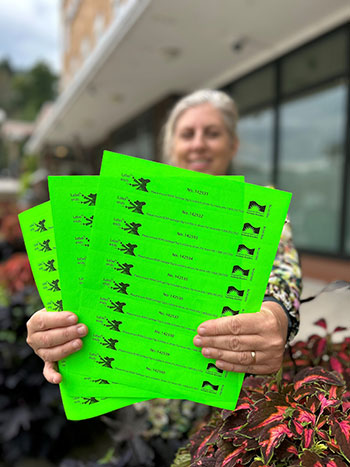
The implementation of garbage tag fees promotes fairness by only charging for waste by those who generate it. If residents utilize the available waste diversion programs, less garbage tags will need to be purchased. Garbage tags will cost $3 fee each and allow for the pick-up of garbage to a maximum of 50 lbs. Apart from Montrose where garbage tags will remain at $3.50 each.
Residents can contact BA Belton, RDKB’s Environmental Communications and Programs Coordinator with any queries regarding the new green bin or garbage collections:
envcoms@rdkb.com | 250.368.0231
Please see area specific information below:
Rossland
Starting in September, Rossland businesses that currently sell GFL garbage stickers will limit sales and minimize the number of extra stickers circulating in the community. Sheets of 10 will be reduced to 5. The sale of all GFL stickers will be stopped as of October 2, 2023.
Purchased GFL stickers will be able to be utilized from October 2 to December 31, 2023 as follows:
- One large GFL sticker will be equivalent to 1 RDKB tag.
- Two small GFL stickers will be equivalent to 1 RDKB tag.
- A partially filled bag will require the use of two small or 1 large GFL sticker. The use of one small bag sticker will not be accepted.
New RDKB garbage tags will be available from participating businesses in early September. These will be the only garbage tags allowed for the service after January 1, 2024. Please do not use RDKB garbage tags prior to October 2, 2023.
Warfield
Warfield property owners who paid for residential garbage collection for 2023 will receive 9 garbage tags for their use. These tags offset the fees paid for weekly garbage service from October to December 2023. Residents can expect the tags, accompanied by a letter, in the coming days.
Trail
The City of Trail will provide a credit on 2024 utilities bills for residents who paid the 2023 annual garbage rate. 84% of the annual garbage rate is to cover the cost of curbside pick-up so the credit will reimburse residents for the collection costs from October to December 2023 that the RDKB will be responsible for. The City’s spring and fall yard waste pick up service, which is the remaining 16% of the annual rate will continue with in the current year and into 2024.
Montrose
The community of Montrose will keep its current curbside garbage pick-up service. It will still be picked up every Wednesday, and at the same price - $3.50/Village bag. The weekly collection of green bins (food waste) will be provided by the RDKB, on the same day as garbage collection.
Fruitvale
- 13 FREE RDKB garbage tags will be allocated to each household in lieu of being charged for the service in utilities. These will be available at the Village office in September for use October 1st onwards.
- Although the Village of Fruitvale does bi-weekly garbage, RDKB will be collecting garbage weekly from October 2nd onwards.
- Village of Fruitvale garbage bags will not be mandatory for use from October onwards, but RDKB garbage tags will be mandatory.
- Village garbage bags will not be reimbursed as 13 RDKB garbage tags are being given free of charge.
- Once the 13 tags are used, Village residents can purchase RDKB tags for $3.00 as needed, from the Village office.
Area A and Area B (excluding Genelle)
For many residents in these areas, you have either never had garbage pick up or you have a direct contract with a local hauling company (such as GFL or Waste Management). Starting October 2, 2023, the RDKB will be providing weekly curbside collection of green bin and garbage to the vast majority of residents. A collection calendar will be delivered to residents within the first two weeks of September by GFL staff. Keep an eye out for it!
Area B (Genelle only)
Waste Management will continue to operate garbage pick-up every Monday until its contract expires on March 31, 2024. The RDKB will be collecting green bin waste on the same day as garbage, so residents can place both materials at the curb on the same day. Starting April 1, 2024 the garbage collection service will transition to the RDKB and residents will be required to then purchase RDKB garbage tags.